Global Quality, Local Practice: What the IFCC Meeting Brings to the Daily Routine of Laboratories

Global Quality, Local Practice: What the IFCC Meeting Brings to the Daily Routine of Laboratories

Global Quality, Local Practice: What the IFCC Meeting Brings to the Daily Routine of Laboratories

Reflections from the international workshop highlight how continuous education, internal control, and external assessment support safer decision-making in laboratory routine.

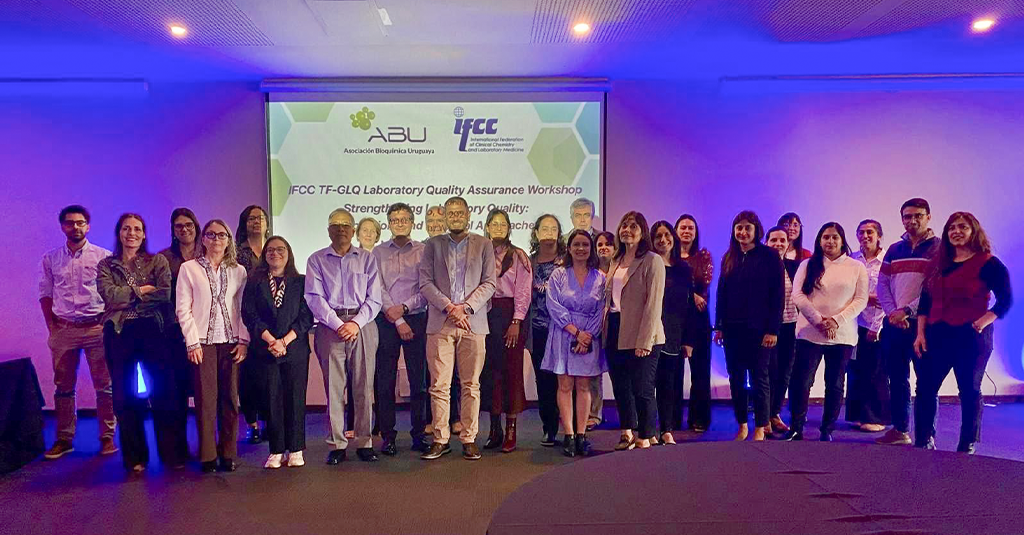
The recent meeting promoted by the IFCC – International Federation of Clinical Chemistry and Laboratory Medicine – and its Task Force on Global Laboratory Quality (TF-GLQ) in Montevideo brought together specialists and professionals to discuss practical pathways to laboratory quality. The discussions addressed management, internal quality control, external quality assessment, and indicators, always with a focus on the practical application of these concepts in daily laboratory operations.

More than presenting technical recommendations, the event underscored a central point: international standards gain meaning when they engage with the local context. Laboratories in different countries face similar challenges, such as properly interpreting analytical performance, standardizing processes, and transforming data into improvement actions.

Quality as a Daily Commitment

One of the most recurring messages was that quality is not sustained solely by documents or regulatory requirements. It depends on continuous team learning and the consistent use of tools that support safe decision-making. Internal quality control and external quality assessment programs were highlighted as allies in identifying opportunities and reducing uncertainty.

Bridges Between the Global and the Local

The meeting featured high-level presentations delivered by three members of the TF-GLQ: Dr. Ivan Blasutig, Prof. Qing Meng, and Dr. José Poloni, Educational Manager at Controllab, along with two highly respected local representatives: Q.F., B.C. Beatriz Varela and Q.F., B.C. Ana Piana.

The combined expertise of these professionals provided participants with valuable insights into international standards and best practices, as well as approaches adapted to the Uruguayan context. This integration of global and local perspectives enriched the discussions and ensured that the content was both relevant and applicable to everyday laboratory activities.

What Laboratories Take into Practice

The key takeaway from the meeting was straightforward: quality is a living process. It is strengthened by the effective use of indicators, participation in comparative programs, and investment in people. By connecting global trends to daily practice, the sector enhances the reliability of results and the quality of patient care.
Sign up for our newsletter

Receive relevant publications about lab and solutions for
quality management.

plugins premium WordPress
X
We use cookies and other similar technologies to improve your experience, enabling a more personalized navigation, according to the characteristics and your interest. For more information see our Privacy and Security Policy.

PRM 0009

Certified Reference Material Producer

Accredited by Coordenação-Geral de Acreditação do Inmetro

Controllab has been accredited as a Certified Reference Material (CRM) Producer since 2016 by Cgcre, under number PMR 0009. The conformity assessment is carried out in accordance with the requirements established in ABNT NBR ISO 17034 and Inmetro standards, ensuring competence for the production of CRMs, as defined in the Scope of Accreditation.

This accreditation attests to Controllab’s technical competence in producing CRMs according to international requirements and enables it to be recognized in other countries, under mutual recognition agreements, thereby reducing technical barriers between Brazil and other countries across continents.

Materiais de Referência Certificados - PMR 0009 - ABNT NBR ISO 17034-Controllab
Cgcre is signatory to the Mutual Recognition Arrangements of the International Laboratory Accreditation Cooperation (ILAC) and Interamerican Accreditation Cooperation (IAAC).

CAL 0214

Calibration Laboratory

Accredited by Coordenação-Geral de Acreditação do Inmetro

In December 2002, the Calibration Laboratory was accredited by Cgcre. With this recognition, it became part of the Brazilian network of accredited laboratories, under number 214. Since then, it has been periodically evaluated for the maintenance and/or extension of its accreditation.

The Inmetro seal attests to Controllab’s technical competence, credibility, and operational capability for calibration services, in accordance with the requirements of ABNT NBR ISO/IEC 17025.

Calibração de Instrumentos - CAL 0214 - ABNT NBR ISO/IEC 17025 - Controllab
Cgcre is signatory to the Mutual Recognition Arrangements of the International Laboratory Accreditation Cooperation (ILAC) and Interamerican Accreditation Cooperation (IAAC).

PEP 0003

Proficiency Test Provider

Accredited by Coordenação-Geral de Acreditação do Inmetro

In September 2011, Controllab was accredited by Cgcre as a proficiency test provider, under nº PEP0003. Initially as part of a pilot project by Inmetro, this accreditation was based on ILAC G13: 2007 and included several clinical and hemotherapy tests. In the periodic evaluations of this accreditation, new segments and tests are included and the evaluation is now conducted according to ABNT NBR ISO/IEC 17043.

This accreditation attests to Controllab’s technical competence to develop and conduct proficiency tests in accordance with international requirements and enables it to be recognized in other countries, in accordance with mutual recognition agreements signed by Brazil in Mercosur, the Americas and Europe.

PEP 0003 - ABNT NBR ISO-IEC 17043 - Controllab

Cgcre is signatory to the Mutual Recognition Arrangements of the International Laboratory Accreditation Cooperation (ILAC) and Interamerican Accreditation Cooperation (IAAC).